
Learning Global Leadership Through International Collaboration! Hyogo Prefectural University Course Report
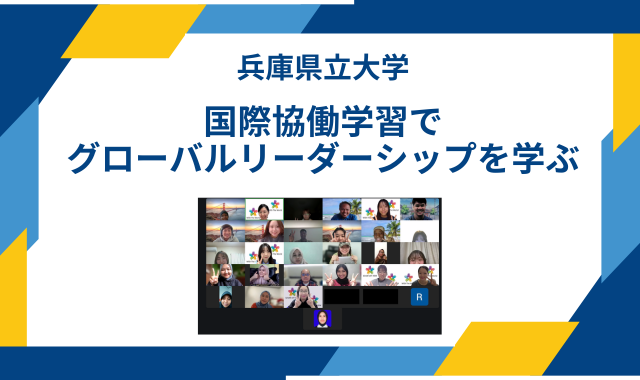
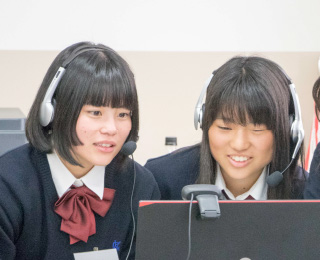
An online exchange class was held between students from the University of Hyogo and university students from Indonesia to learn about global leadership. In the class, the students worked together to learn about the actions required of global leaders.Credo (code of conduct)I worked on a project to compile it as "[...]."
In recent years, cross-border communication has become more commonplace due to the progress of globalization and the spread of social media. Against this backdrop, intercultural understanding and leadership training programs were implemented in collaboration with international students to cultivate the skills necessary for international students to learn and work together in the future.
In class, we first learned about concepts related to intercultural differences and considered what kind of person a global leader is. As part of that, we worked on a project to create a code of conduct called a "credo," and practically learned about the leadership skills we had learned in lectures by collaborating with students from overseas.
A credo is a collection of values and behavioral guidelines that an organization or individual cherishes. In this class, students discussed amongst themselves what attitudes and behaviors are expected of global leaders and compiled them into a credo.
〇Class flow
| Day 1 | - Self-introduction/Cultural exchange (Introduce recommended items from your country) • Understanding other cultures: one's own country's scheduling culture ·discussion “What is a good leader and a bad leader?” |
| Day 2 | • Small talk: About university life Discussion 1: Differences in values across cultures Discussion ② The group discussed the qualities and behaviors necessary for global leaders and decided on key items. |
| 3rd day | Icebreaker: Freely talk about each other's countries and cultures.
Cross-cultural understanding: Building trust in multinational teams - Credo |
| Day 4 | - Interim announcement We've revealed three essential qualities and behaviors for an ideal global leader.- Feedback/Q&A Based on presentations from other groups, we exchanged opinions on the actions necessary to achieve the credo.・Panel discussion By listening to people who work in multinational corporations and international environments, we can deepen our understanding of global leaders. |
| Day 5 | • Mini-lecture: Effective presentations for a global audience - Adjusting the CredoPreparation for the final presentation |
| Day 6 | Final presentationClosing Ceremony: Announcement of the Best Team |
Credo creation project
In class, students discussed the attitudes and behaviors required of global leaders and created a "credo" (code of conduct) in each group. Through discussions that took into account cultural differences, the students articulated the values and behaviors they believe are important in a global environment.
グループ1
• Cultural Intelligence (the ability to understand and respect cultural differences)
Trust (building trusting relationships)
• Empowerment (bringing out the best in team members)
In Group 1, participants concluded that understanding cultural differences and building trust among team members are crucial for effective leadership in a cross-cultural environment. They also emphasized the importance of leaders not simply issuing orders, but rather fostering the individual strengths of each team member.
グループ2
• Critical Thinking (the ability to consider and judge things from multiple perspectives)
Cultural Awareness (an attitude of understanding and respecting cultural differences)
• Adaptive Communication (the ability to communicate flexibly according to the person and situation)
In Group 2, participants concluded that the ability to objectively assess situations and an understanding of cultural differences are crucial for effective leadership in a global environment. They also emphasized the importance of flexibly adapting communication methods to different individuals and situations when collaborating with people from diverse backgrounds.
グループ3
Credo
Cultural Emotional Intelligence (the ability to understand cultural differences and be considerate of others' feelings)
• Being Visionary (The ability to look ahead to the future and provide direction)
• Accountability (the attitude of taking responsibility for one's own actions and results)
In Group 3, participants concluded that understanding cultural and emotional differences is crucial for effective leadership in a cross-cultural environment. They also emphasized the importance of presenting a clear vision for the future and for leaders to act responsibly to guide their teams.
グループ4
Credo
Transparency (Act with transparency and build trust through honesty and an open attitude)
• Emotional and Cultural Intelligence (Understanding the emotions and cultural differences of others, and respecting diversity)
• Strategic Vision (Having a forward-looking strategic perspective and connecting actions with objectives)
In Group 4, we concluded that leadership is not determined by job title or position, but rather by the influence one has on people and teams. We also shared the understanding that a leader is not someone who controls members, but rather someone who builds trust, guides the team, and creates the future together.
The students engaged in discussions, taking into account cultural differences, and compiled a credo outlining the attitudes and behaviors expected of global leaders from their respective perspectives. The credo creation process provided a practical opportunity to learn about intercultural understanding and leadership.
〇Scenes from the panel discussion
On the fourth day, a panel discussion was held with professionals active in international environments as an opportunity to deepen their learning towards creating a credo. Students commented:
I learned the importance of channeling my dreams and passions into environments where I feel I can make a difference.
I realized that since everyone has different values and backgrounds, it's important to avoid preconceived notions and try to understand the other person's background.
These were some of the comments we saw.
→Hearing stories based on real-world experiences deepened my understanding of the attitudes required of global leaders and provided valuable insights for subsequent discussions on creating our credo.
Student Voices - Changes After 6 Days of Classes
Day 1: Realizing the difficulties of intercultural communication
I learned that communication styles and senses of time differ depending on the culture, and I realized the importance of mutual understanding and communication in bringing together people from different cultures.
I was nervous about discussing with international students in English, but I learned the importance of trying to express my own opinions.
→On the first day, many participants expressed that they were initially confused by the English-language discussions and cultural differences, but they also realized the importance of understanding the other person's culture while communicating.
Day 3: Confidence and proactiveness in group work
I realized that because each member builds trust in a different way, it's necessary to devise creative ways of communicating.
I gradually became less and less hesitant to speak up.
Even though I wasn't confident in my English, I was able to actively try to speak up by rephrasing and finding creative ways to express myself.
→Through repeated discussions, the team members became less hesitant to speak in English, and their awareness of communication and cooperation within the team increased.
Day 6: Deepening Leadership and Intercultural Understanding
- My anxiety about taking on a leadership role in the team decreased, and it led to experience in acting as a leader.
In a multinational team, I felt that expressing opinions verbally and sharing them leads to building trust.
→ Through the lessons, students gained experience collaborating while understanding different cultures, and their understanding of global leadership and communication deepened.
Through six days of discussion and collaboration, the students had the opportunity to learn practically about intercultural understanding and global leadership. Through discussions in English and the creation of a company credo, they gained experience in shaping shared ideas while respecting cultural differences.
Learnings gained through the program
In this program, Japanese and Indonesian students learned about intercultural understanding and global leadership through discussions using English as a common language. Through the project of creating a credo, the experience of collaborating with international students through discussions and shaping a single idea provided an opportunity to articulate shared values while respecting cultural differences. This process was practical learning that could not be obtained through lectures alone, and through six days of collaboration, it became an opportunity to realize the importance of producing results as a team while engaging in dialogue in a cross-cultural environment.
Interacting with international students online allows you to practically learn about different cultures in a way that you wouldn't get in classes or during your regular school life. This ability to "learn together across time and place" is one of the major attractions of online international exchange.
At With The World, we aim to create international exchange classes that allow each student to develop the skills they wish to cultivate.
We hope that this program will provide students with an opportunity to connect with the world, experience different cultures and values, and broaden their own potential.
If you are interested, please see the link below for more details.