
For Teachers | What is Active Learning? A Thorough Explanation from Classroom Practice Examples to Assessment Methods

In Japanese classrooms today, there is a shift from a style where teachers unilaterally impart knowledge to one where students formulate their own questions and utilize that knowledge through dialogue. With the mandatory introduction of "Comprehensive Inquiry Time" in high schools from the 2022 academic year and the realization of "proactive, interactive, and deep learning" advocated in the new curriculum guidelines, active learning is no longer a cutting-edge learning style for a select few, but a necessary initiative for all classrooms.
This article comprehensively explains everything from the theoretical aspects of active learning, such as its basic definition and background, to specific teaching methods, tips for using ICT, and even assessment methods. It answers questions like "Why is this necessary now?" and "How can we specifically proceed to deepen learning?" Use this as a practical guide to cultivate the qualities needed for the next generation.
1. Definition and basic concepts of active learning
Active learning (AL) refers to the entire process in which learners actively engage in learning. It moves away from one-way knowledge transmission by teachers,The goal is for learners to formulate their own questions and, through dialogue and activities with their peers, raise their knowledge to a level where it can be "used.".
This learning method has a clear theoretical basis. From the perspective of education and neuroscience, knowledge is thought to be acquired only when learners connect their "existing knowledge" with "new information" and reconstruct it in a way that makes sense to them. Furthermore, rather than simply inputting information,Engaging in output activities such as writing, speaking, and presenting dramatically improves memory retention.This also helps to promote metacognition, which involves objectively observing what you don't understand.
Active Learning (AL) in actual classrooms encompasses a wide range of methods, from everyday practices such as "one-minute pair discussions" and "retelling" where students explain what they've learned in their own words, to "inquiry-based learning" and "PBL (problem-based learning)" that address local issues. In any method, the key is a flexible teaching approach that creates a state where learners can actively think and deepen their understanding of the issues.
2. Why is it attracting attention now? Historical background of its introduction and the current situation in Japan.
The roots of active learning are said to lie in the United States during the 1980s and 90s. While the educational philosophy of "self-directed learning" existed in various parts of the world before that, it was in American university education that the term became established as a key word in educational reform.
In Japan, the term "active learning" officially appeared in educational policy and quickly spread in 2012. Initially, it was introduced at universities to implement active education. Subsequently, its introduction to elementary, junior high, and high schools began to be seriously considered, and now, in schools everywhere, a style of learning activity has become established where students formulate their own questions and develop problem-solving skills through a cycle of "setting a problem," "gathering information," "organizing and analyzing," and "summarizing and expressing."
3. Benefits and learning effects of introducing active learning into the classroom.
The biggest advantage is improved learning retention.Indeed, activities involving teaching or discussing with others are more memorable and promote deeper understanding than passively listening to lectures.
For example, in English language education, instead of simply memorizing grammar and vocabulary as knowledge, engaging in activities such as "speaking and writing using previously learned expressions" helps solidify that knowledge in long-term memory and transform it into practical skills.
In addition to critical thinking and logical structuring skills, collaboration with others fosters metacognitive abilities, cooperativeness, leadership, and empathy. The successful experience of solving problems independently enhances self-esteem and contributes to the formation of autonomous learning habits. These are important qualities that form the foundation of lifelong learning that continues even after schooling is completed.
4. Disadvantages, challenges, and solutions of implementing active learning
Several challenges arise during implementation.Concerns include the possibility of not being able to fully cover the textbook content due to the time spent on activities, and the increased likelihood of anxiety about balancing these activities with university entrance exam preparation.Furthermore, in managing lessons, we cannot ignore issues such as "participation gaps" where only a few motivated students take the lead, leaving others behind, and "activity formalization" where the activity itself becomes the goal, resulting in superficial learning. In addition to these, the increased burden on teachers, such as lesson preparation and support during activities, is also a major challenge.
Solutions to these challenges include:First, it's effective to lower the bar and incorporate activities that encourage thinking within the scope of regular lessons, such as "one-minute pair discussions," without deviating from the usual lesson content.In addition, in group work, you can encourage everyone's participation by visualizing progress with shared documents and clearly defining roles and responsibilities within the group.
While it's good to occasionally hold special activities such as extracurricular learning, the key to continued success lies in a sustainable approach that focuses on "how to encourage everyone to think for themselves and create opportunities for them to express their thoughts" as an extension of regular lessons.
5. A learning environment and classroom facilities suitable for active learning.
To effectively implement active learning, it's crucial to have a flexible layout that adapts to the purpose, rather than the traditional "seating arrangement facing the blackboard." For example, a "U-shape" layout is suitable for in-depth discussions with the entire class, while an "island" layout with desks pushed together is ideal for collaborative work in smaller groups.By optimizing the layout according to the activity, the psychological distance between students can also be reduced.
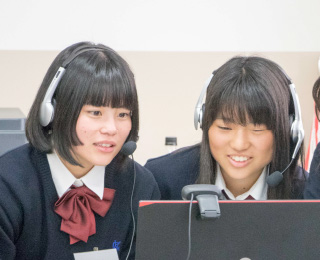
Furthermore, to conduct collaborative learning with other schools or international exchange with overseas schools, online conferencing systems can be used to easily facilitate learning from the usual classroom. Using the "breakout room function" of Zoom or Teams, small-group discussions similar to face-to-face meetings can be achieved online. In this way, by simply making the most of existing facilities, it is possible to create a sufficiently high-quality learning environment even without advanced equipment or facilities.
💡For specific methods on desk arrangement, please see this article for a detailed explanation. ↓
We also introduce applied classroom layouts that support ICT and online communication, so please take a look if you are a teacher who is unsure about how to use them in your daily lessons.
6. The role of the instructor and tips for successful facilitation in running a class.
In active learning, the teacher's role is that of a "facilitator" who supports learning.What is required of teachers is not simply to provide the correct answers or to leave it up to the students and just observe, but to take steps to encourage students to express themselves.This requires flexible support tailored to the situation, such as offering hints when discussions reach an impasse, or guiding them back on track when they go off on a tangent.
The key here is finding the right balance between "student autonomy" and "teacher intervention."Therefore, timely intervention is essential, such as offering help to organize what students want to convey or adjusting the flow of discussion to prevent it from being dominated by certain students. In particular, in discussions conducted in English, if left to individual initiative alone, disparities in participation can become very apparent, leaving less capable students behind.
It is important to lay the groundwork so that students feel confident that they can speak up and take the lead themselves. Highly effective intervention by teachers is essential for improving students' motivation and willingness to learn, as well as the quality of their learning.
7. Accurately assess results! Creating and utilizing evaluation methods and rubrics.
In active learning, traditional assessment methods such as paper tests or assigning scores to completed projects are insufficient to adequately measure the quality of learning. Even when evaluating only the group's completed work (such as posters or presentations),There are concerns that individual contributions may not be adequately reflected, or that students may focus solely on getting good grades, neglecting their learning.
Therefore, assessment methods that capture the learning process from diverse perspectives become crucial..
For example, it is effective to incorporate "self-assessment," where students reflect on their own learning, and "peer assessment," where students acknowledge each other's contributions and insightful perspectives within a group. This allows for the inclusion of aspects that are difficult to quantify, such as teamwork and the process of refining one's own thinking, as part of the evaluation.
Furthermore, by utilizing portfolios and other tools to record and accumulate learning progress, it becomes possible to visualize how students have changed and grown over time, leading to more satisfying evaluations.
8. The use of ICT and digital technologies that influences the quality of active learning.
The use of ICT significantly improves the quality of active learning. Tools like Google Docs and Slides allow several people to work on a single project simultaneously, making it easy to update and share content in real time while discussing. Even students who are hesitant to speak up can easily write their opinions on a shared screen. For teachers, the ability to directly comment on the data being created allows for timely feedback without interrupting the activity.
Furthermore, using design apps like Canva makes it easier to express one's ideas in a more understandable way by making full use of images and diagrams, thus stimulating students' desire to express themselves.
Furthermore, a major advantage of cross-curricular inquiry-based learning and international activities is the increased access to information beyond textbooks. Students can independently research overseas news and other sources, using translation tools as a supplement. Utilizing digital tools as a foundation for collaboration and expression is key to deepening learning.
9. Specific methods and practical ideas that can be used in the classroom.
There are many different methods of active learning.
For example, the "jigsaw method," where students divide the learning content and teach each other to deepen overall understanding, naturally encourages learning because everyone is given the responsibility of completing their assigned section. Also, "retelling," where students explain and summarize what they have learned in their own words, is effective as training in output—organizing and communicating one's own thoughts. Over a longer period, engaging in "PBL (Problem-Based Learning)," which involves solving local issues and everyday questions, fosters practical thinking skills that transcend the boundaries of individual subjects.
In addition to these, other active learning methods include "pair work," where students have short discussions with their neighbors, and international exchange programs, where students collaborate with partner schools overseas. The key to preventing learning from stagnating is to flexibly use different methods depending on the class situation and the skills you want to develop.
10. The connection between high school education, university education, and future career paths.
At university, conducting specialized research in seminars and research labs requires a proactive approach to questioning and verifying findings. Active learning is crucial for a smooth transition from the passive learning of high school to the active academic pursuits of university. Furthermore, this experience directly impacts one's career after graduation. The "basic professional skills" required of modern professionals (such as the ability to take initiative, think critically, and work in a team) are precisely qualities cultivated through active learning. Individuals who can relearn independently and collaborate with others to create value are highly valued in any profession and possess valuable assets for long-term career development.
Summary | Cultivating the qualities and abilities needed to thrive in the future through active learning
The essence of active learning lies in each student developing the ability to "utilize knowledge and deepen their own questions."
As mentioned in the article, there are challenges in implementation, such as securing time and the difficulty of evaluation. However, these obstacles can be overcome to some extent by utilizing ICT tools, improving facilitation skills, and, above all, by devising ways to make the activities a regular part of regular lessons.
The English language skills and other abilities such as critical thinking, collaboration, and metacognitive skills developed here will form a strong foundation to support your research at university and your future career.
To implement active learning effectively, appropriate question design and the creation of a suitable learning environment are essential.
In particular, incorporating international exchange programs can naturally create opportunities for students to ask questions, think for themselves, and express themselves.
To safely and reliably create a "genuine learning environment" that goes beyond the confines of the classroom, a partnership with a specialist in international exchange is essential.
Leveraging our global network, we provide comprehensive support to create an environment where students can feel safe and confident in expressing their individuality.
If you'd like to learn more about specific examples of lesson design that encourages autonomous learning, please feel free to contact us.
Contact Us: https://withtheworld.co/contact/
note: https://note.com/shunta_igarashi
X: https://x.com/withtheworld_42