
[English ICT education] Benefits and case studies

In this article, we will introduce English ICT education, which has been attracting increasing interest in educational settings in recent years!We will explain the merits of introduction and how ICT education is actually used in schools.
What is ICT education?
What is ICT?”Information and Communication Technology”.Refers to information and communication technology.Nowadays, ICT is used in various aspects of life.
AndWhat is ICT education?It is the digitization of education that utilizes information and communication technology such as personal computers, the Internet, and video in school education.The Ministry of Education, Culture, Sports, Science and Technology is also actively promoting the development of the ICT environment in schools, and has set up a GIGA school concept that provides one terminal for each student.
Advantages of ICT education
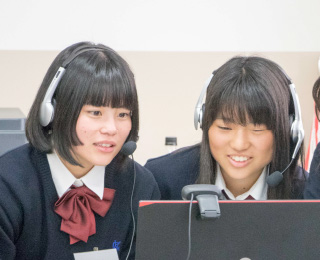
Next, ICT educationBenefitsI'd like to introduce_______ The first advantage is that the range of classes can be expanded. For example, these daysThe importance of language activities that are conscious of the power of “exchange” and improvisationis increasing, but ZOOM etc.By using the video function, you can easily communicate with students overseas. In addition, by using ICT tools, we can provide opportunities to use English in practical ways that were previously difficult, such as exchanging emails with students overseas.
The second advantage is that students can actively engage in class. Having the joy of learning about different cultures and the feeling of learning and working with peers around the world will increase students' interest and encourage them to participate more actively in class.
Furthermore, the society in which students are leaving is one where ICT is used as a matter of course, from video conferencing tools to materials creation tools such as PowerPoint. ICT skills lead to "employability". This is especially true if you want to work with a foreign country. Being exposed to tools even little by little in class helps students expand their future possibilities.
Of course, if the purpose is to use ICT tools, it is putting the cart before the horse. Once we have clarified the skills we want our students to acquire within and across subjects, we will incorporate them little by little.
Reference: High School Curriculum Guidelines (30 Public Notice) Commentary (Ministry of Education, Culture, Sports, Science and Technology) (https://www.mext.go.jp/content/1407073_09_1_2.pdf)
Efforts for English ICT education
English ICT education in practiceCase Studies,By elementary school, junior high school, and high schoolI would like to introduce you to
Case study in Sapporo City, Hokkaido [Elementary school]
This is an example of English ICT education carried out by 6th grade elementary school students in Sapporo City, Hokkaido. In class, students first watch an English introduction video of junior high school created by junior high school students in the ward, and then elementary school students think about junior high school life and the future and record speeches using ICT devices. The video was then viewed by junior high school students, and the elementary school and junior high school students used web conferencing software to review and interact with each other about the speech. In addition to terminals and conference software, the class progressed smoothly by using various ICT technologies, such as using learning support software and chat functions to evaluate speeches.
Reference: Elementary school, XNUMXth grade, foreign language department, My Future, My Dream Let's make a dream declaration speech (Sapporo City)
https://www.mext.go.jp/content/20211005-mxt_kyoiku01-000015515_gaikokugo_sj5.pdf
Case study of Kawanishi Elementary School (Hyogo Prefecture) [Elementary school]
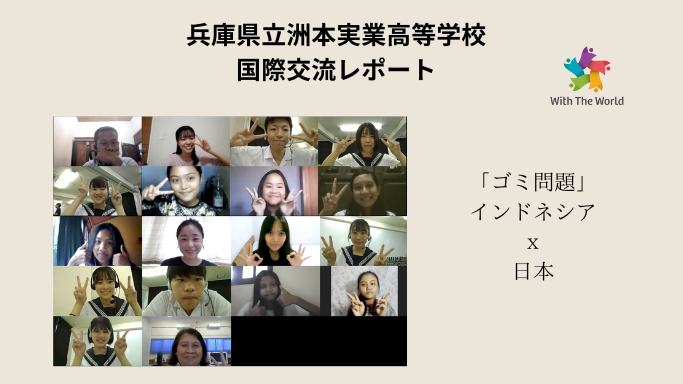
This is an example of an online exchange class held with elementary school students in Malaysia using ZOOM. In the preliminary study, you will learn what kind of country Malaysia is and the English expressions necessary for interaction. On the day of the event, we interacted with Malaysian students via ZOOM, introduced ourselves, played games, and asked each other questions about our countries. After class, the students asked me if they wanted to discover commonalities and differences between cultures and learn English! We have received comments such as:
Case study of Seisho Kaichi Junior High School, Tottori Prefecture [Junior high school]
This is an example of Seisho Kaichi Junior High School in Tottori Prefecture. hereCombining virtual tours (videos) and online international exchange,We held an international exchange program using zoom.You can explore various parts of the world through images and deepen your understanding of social issues while communicating with local people.In addition to taking a virtual tour of the slums, participants watched videos about the problem of garbage piles in the Philippines, the lives of children of the same age who live there, and the actual state of the slums. increase.It will be an opportunity to think deeply about SDGs by actually listening to local voices and problems.
Case study of Kushiro Junior High School attached to Hokkaido University of Education [Junior high school]
Utilizing online tools in classes to develop writing skills. We make it possible to check each person's writing on time. Students write their thoughts on learning tasks in their LoiLo notebooks. Teachers can teach and make corrections based on everyone's answers, making it possible to provide instruction tailored to each student.
https://www.mext.go.jp/content/20200911-mxt_jogai01-000009772_13.pdf
Case study of Okayama Prefectural Katsuyama High School [High school]
First is a case study of a second year student at Okayama Prefectural Katsuyama High School. Here, we created slides for presentations on energy issues on tablet PCs and added handwritten explanations on the tablet screen to make the class more efficient. We also used a screen and projector during the presentation. The class consisted of checking the meanings of words using an online dictionary in the first 10 minutes, listening to passages and reading aloud in the next 35 minutes, and giving a presentation, and the remaining time was spent reviewing and summarizing the words.
Reference: Foreign Language (English II) Lesson 5 Ice that Burns (Okayama Prefectural Katsuyama High School)
http://eduict.javea.or.jp/pdf/h24/53.pdf
Case study of Shizuoka Seiko Gakuin Junior and Senior High School [High School]
Next is an example of online international exchange at Shizuoka Seiko Gakuin Junior and Senior High School.As a problem-solving type learning, we conducted research discussions and problem-solving projects online with overseas students on energy problems in our own countries and exchange countries.Here, in addition to using Jamboard for brainstorming, LINE Support was used as ICT for the assistant to support English learning using LINE.In the future, it is expected that there will be more opportunities to collaborate with people from overseas using the Internet.
Case study of Shoin Junior and Senior High School [High School]
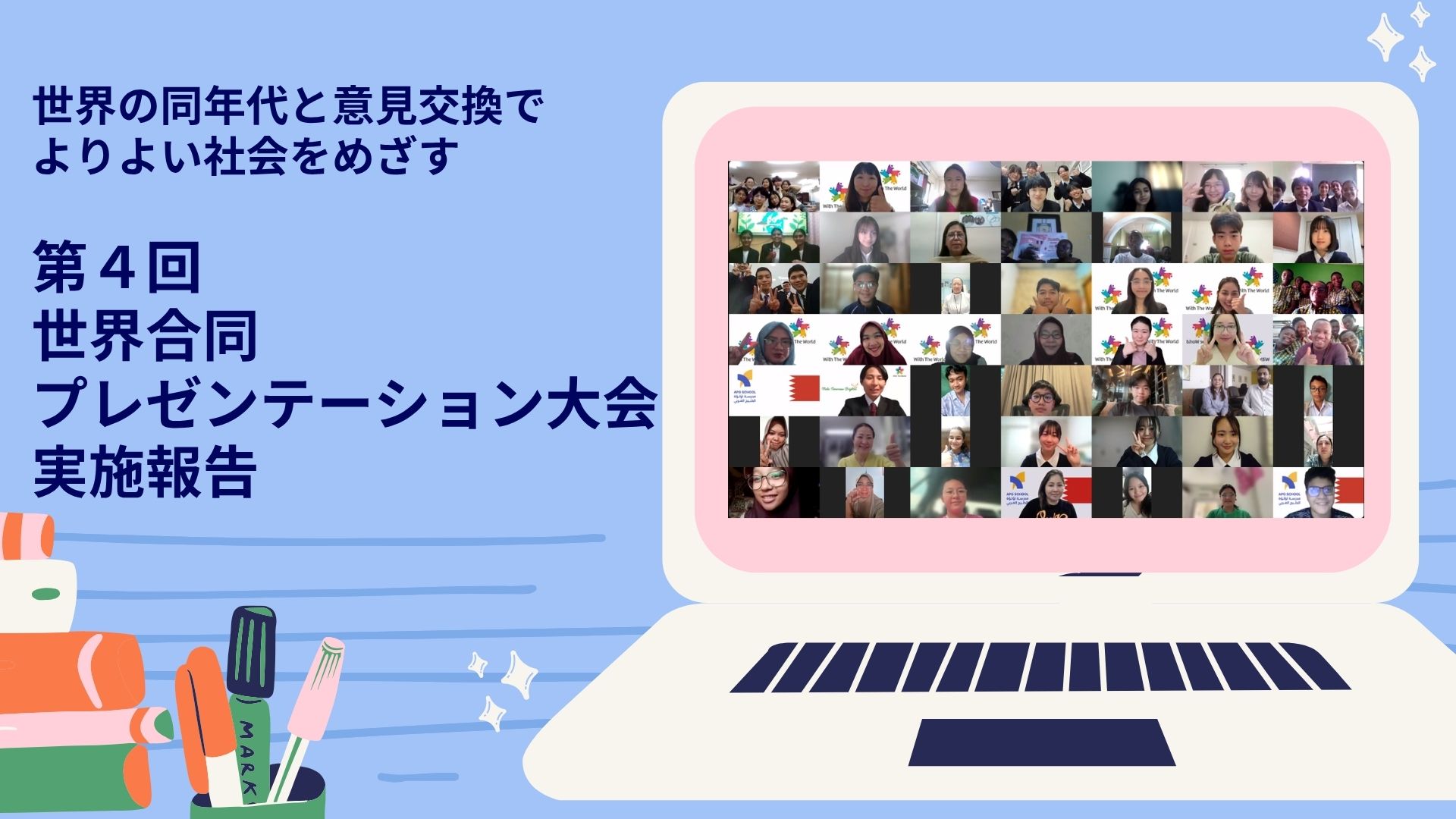
With the theme of ``Carrying out activities to improve society as a junior high and high school student,'' throughout the year, students engage in activities ranging from understanding problems to planning and implementing actions to solve them. In the first semester, each grade was assigned a theme and a joint SDGs presentation was held. Acquire knowledge about the problem. Then, use online tools such as ZOOM,Learn about the current situation of issues from a local perspective from local NGOs/NPOs and local children (*).Output what you have learned as a presentation. After that, in the second semester, students plan and implement actions to solve problems related to the theme. The results of the actions taken will be presented at a presentation competition where students from around the world gather in February.

*Learning with children in Zambia (With The World)
With The World offers online classes where you can study with overseas students. We partner with over 120 schools and local governments (prefectural offices, boards of education, etc.) across the country to provide a place to use English practically and explore social issues in English. For inquiries regarding classes, please feel free to contact us using the form below. *If you are in a hurry, please call (078-600-2294)Please contact us.
Summary
We have introduced the definition and benefits of ICT education, as well as examples of English ICT education efforts!
As introduced in the introduction case above, through online international exchange such as problem-solving learning, which is active learning, and virtual tours, various ICT tools such as zoom and LINE support are used to focus on social issues including SDGs. We promote cross-cultural exchange.Through these efforts, students are more motivated to learn English, and have the effect of being proactively involved in classes.It is also a valuable opportunity to gain new values by interacting with different cultures.