
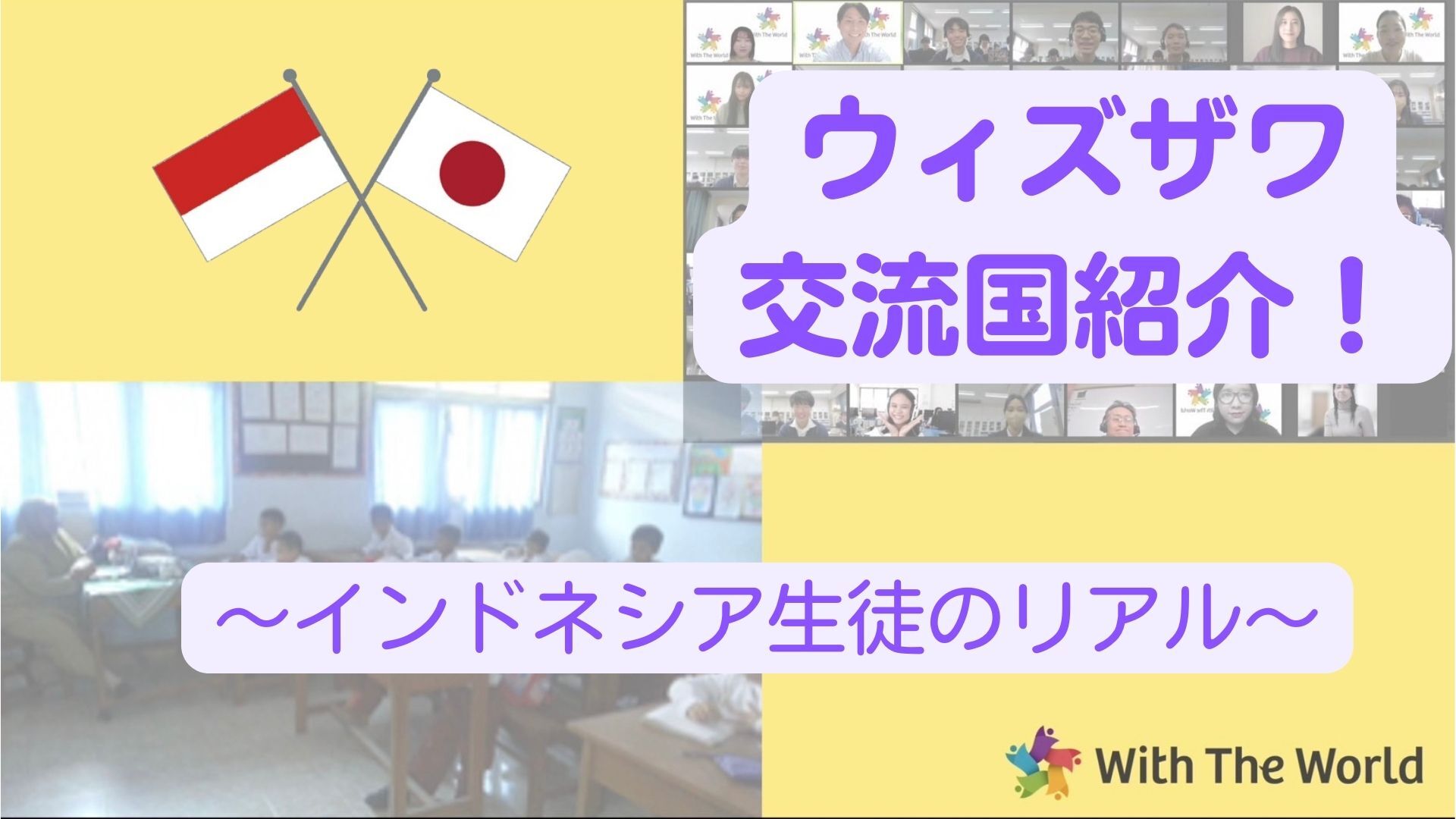
Introducing exchange countries! ~ Real life of Indonesian students ~
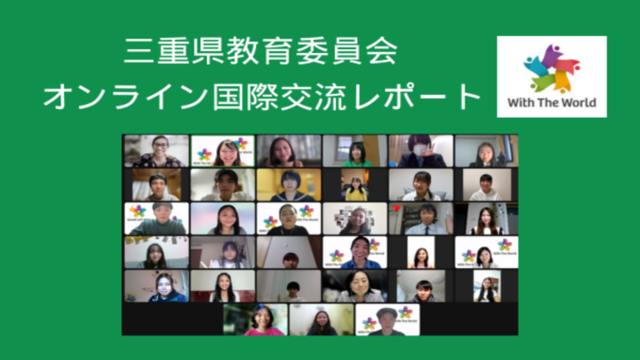
We, With The World, have been working in countries such as the Philippines, Vietnam, Australia, and India.Local studies at 500 schools in 67 countries around the worldschoolWe have been holding international exchange classes in partnership with!
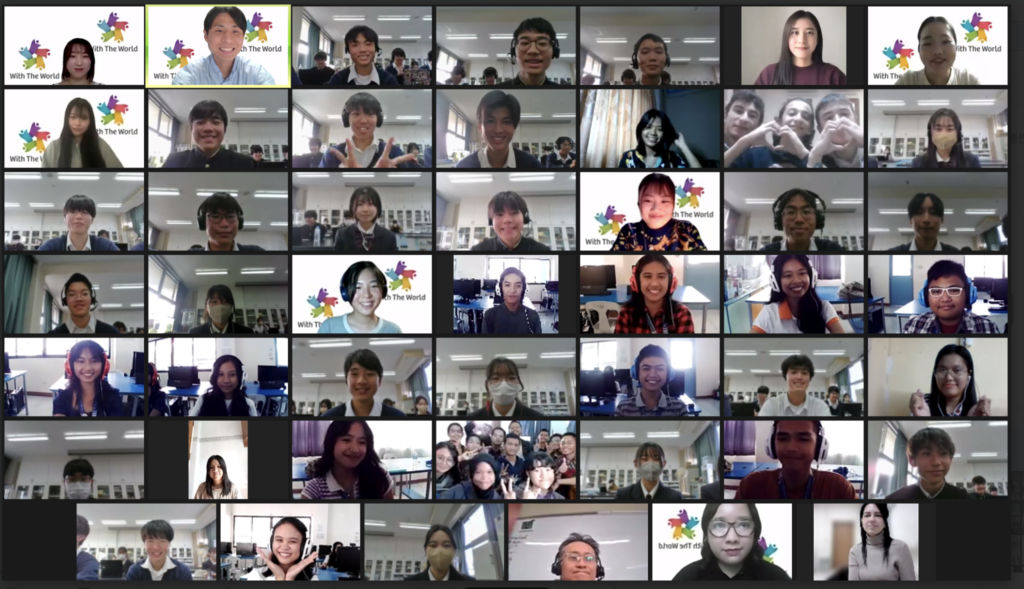
Source: Class at Kurashiki Seiryo High School, Okayama Prefecture (https://withtheworld.co/kurashiki-seiryou-high-school/)Than
However, when it comes to international exchange, there are many people who are not sure about the situation in the other country or the lives of local students, and are both excited and anxious at the same time.
To answer those questions, this timeIndonesia We will introduce you to!
Basic information about Indonesia

Indonesia is located in Southeast Asia and is one of the world's largest island nations, consisting of 13,000 islands.
The population is approximately 2.7 million people.4rd place in the worldWith an average age of 29.9 years old (as of 2023) and a large number of young people, it can be said to be a vibrant country.
Consists of about 300 ethnic groupsMultiethnic countryIn addition to the official language Indonesian, regional languages such as Javanese, Sundanese, and Madurese are spoken.
Also, from elementary schoolEnglishThere are many students who can speak English without any inconvenience, and we also communicate in English during exchange classes!
Indonesian school life and culture
From here, we will introduce you to the reality of Indonesian students that we have actually seen during our exchange classes so far!
Most schools in Indonesia have a two-term system, and unlike Japan, the first term starts in July.
Class hours are also different from Japan, with weekdays from Monday to Friday.Classes begin at 7 a.m. and run from 14:15 p.m. to XNUMX:XNUMX p.m. local time.Have received.
A traditional Indonesian event is held every Monday morning.flag ceremony” is held, and you can feel the strength of patriotism.
Similar to Japan, major subjects such as mathematics, science, and language are studied in classes, but in Indonesia, which is a multilingual and multiethnic country, not only the official languages Indonesian and English are studied, but also local words and dialects are taught. Talocal language, including JapaneseOther foreign languagesThis is also covered in class!
In addition, after-school extracurricular activities, similar to club activities in Japan, are actively held, and there are sports clubs such as basketball and futsal, traditional dance and science and technology clubs, so you can choose from a wide range of fields that suit your interests. You can choose what you want!
National holidays, such as Independence Day on August 8th, are also celebrated in schools, and religious events and celebrations are planned depending on the diversity of the student body.
In addition, the school holds its own arts and culture exhibitions, sports competitions, and science and innovation fairs, providing many opportunities for students to demonstrate their daily achievements in a variety of ways.
In addition, international days such as ``Earth Day'' and ``International Women's Day'' are sometimes featured as school events.Highly interested in international issuesThere are also many students.

students during recess
Summary
What did you think?
There are many aspects of Indonesian school life and culture that are different from those of Japan, and even in exchange classes, students from both sides can often be seen sharing their respective countries' cultures with great interest.
I would appreciate it if I could give you a concrete image of the reality of students in Indonesia!
This article introduces an online exchange class given by an Indonesian professor.
Please take a look as well!
Tokushima Prefectural Board of Education Online International Exchange Report
→https://withtheworld.co/tokushima-board-of-education/
Reference: Ministry of Foreign Affairs, “Let’s take a look at schools around the world: Republic of Indonesia”, https://www.mofa.go.jp/mofaj/kids/kuni/indonesia_2014.html