
What is the appeal of studying abroad in Japan?
Table of contents
When many people hear the word "study abroad," they probably think of going abroad to study. So, what does it mean to ``study abroad'' ``in Japan''?
In this article, we will introduce the advantages and disadvantages of studying abroad in Japan, which is gaining attention, as well as case studies tailored to different age groups!
What is domestic study abroad?
First of all, what is studying abroad in Japan? If studying abroad generally involves traveling overseas, studying abroad in Japan is an effort to have a study abroad experience in ``Japan'', where we currently live. Studying abroad in Japan allows you to gain international experience and practical language learning without leaving Japan.
In recent years, there have been times when it has been impossible to travel abroad due to the pandemic, and the demand for studying abroad in Japan has further increased. Although it has become less difficult to travel abroad, more and more people are choosing to study abroad for various reasons. For example, you may be interested in language learning or international exchange, but living abroad can be difficult in terms of cost and safety. I can't leave Japan for work or school. I want to improve my language skills, but I don't have the opportunity to speak the language domestically. For people with these concerns, studying abroad in Japan is an effective way to take a step forward.
Is studying abroad really a good idea? Advantages and disadvantages
Is studying abroad really the right method for me? Let's think about the various advantages and disadvantages!
Benefits
1. Low hurdles for participation
The appeal of studying abroad domestically is that the hurdles for participation are lower than studying abroad. Traveling abroad comes with certain risks. Expenses such as travel costs, living expenses, and language school tuition fees are high, and there are some students who are at risk of getting sick or injured, security issues, or the fact that they have to leave Japan for a while (taking a leave of absence from school). , quitting one's job, etc.). What if you take that much risk and still don't get the results you're satisfied with? What if life there doesn't suit you and you have to return home? There are also other concerns. Studying abroad in Japan has the advantage of being able to do it in your current location without having to travel, so there are no risks or stress, and it is easier to take the plunge.
2. You can do it at your own pace and in your own time.
One of the appeals of studying abroad in Japan is that you can choose a method that suits you at your own time while continuing with your daily life. Since there is no fixed period like studying abroad, you are free to participate whenever you want, even when you don't have school or work. The disadvantages of studying abroad in Japan, which will be introduced in detail later, include the difference in experience and language ability compared to studying abroad, but it is a practical option that does not require giving up on your current lifestyle, is risk-free, and is inexpensive. Studying abroad in Japan can be considered "the best part of studying abroad" in that you can learn English and experience cross-cultural exchange.
There are various ways to study abroad, so if you can find the method that suits your goals, you can have a great study abroad experience.
3. Improve motivation for language learning
Learning a language is a long and arduous journey for many people. When you study in Japan, you spend a lot of time inputting knowledge into yourself, and it is difficult to take the opportunity to output and put what you have learned into practice. If you continue to study only with textbooks, audio recordings, and videos, you will often lose sight of the reason, meaning, and specific goals you have for wanting to learn the language. By studying abroad in Japan and interacting with people who actually speak the language, you will be able to clarify your own challenges and goals by experiencing the joy of being able to communicate with others and the dilemma of not being able to get what you want to say across. If you can set a specific goal for how you want to be able to use a language, language learning will not just be a long and unpredictable process, but will become something that you can enjoy as you progress.
In fact, in the Ministry of Education, Culture, Sports, Science and Technology's report titled ``Examples of Online International Exchange in High Schools,'' an example from Futaba Mirai Gakuen Junior High School in Fukushima Prefecture states that ``Experiencing actual communication using English brings joy and joy.'' This experience of frustration led to an increase in my desire to further study English."
Ministry of Education, Culture, Sports, Science and Technology “Examples of online international exchange at high schools, etc. - Examples of international exchange with schools other than sister schools” ↓
https://www.mext.go.jp/a_menu/koutou/ryugaku/koukousei/20210331-mxt_kouhou02-5.pdf
Drawbacks
1. Is it not possible to improve language skills as much as studying abroad?
Unlike studying abroad, where you can create an environment where you are immersed in a foreign language 24 hours a day, 365 days a year, studying abroad domestically may yield fewer results even if you study abroad for the same period of time. Even if you use a foreign language during that time, if you have to converse in Japanese when you get home and use Japanese at school or work, it is simply time to be exposed to the language and failures and successes in actual communication. There will be a difference in the level of proficiency gained.
XNUMX. Will it be a repeat of “studying abroad”?
Learning a language is not the only reason why you want to study abroad. The real pleasure of studying abroad is the experience of meeting many people locally, the culture shock that comes from living in a different culture, and the broader perspective you gain by overcoming it. There are opportunities to experience different cultures in Japan without going abroad, but the number of people you can interact with, their backgrounds, etc. may be limited. When interacting with foreigners living in Japan, there is a possibility that they are interested in Japan or already have a deep understanding of Japanese culture, so in that sense, it is a completely different place in a completely unknown place. It may not be the same experience as studying abroad, where you can meet people with different backgrounds. I think it's a good idea to keep this in mind if you want to replicate studying abroad in your domestic study abroad experience.
Examples of studying abroad in Japan
From here, we will introduce recommended domestic study abroad options for each age group. Let's find a method that suits your goals and schedule!
Domestic study abroad recommended for junior high and high school students
1, English Village
This is an experiential English learning facility called "English Village." Everything in the facility, including communication with staff, is in English only, so you can enjoy an environment as if you were overseas. We provide a good opportunity for junior high and high school students to output the English expressions they learned at school and input new, more practical conversational expressions. It is also suitable for people who are thinking about studying abroad to have a simulated experience in Japan. There are many facilities that can be used by schools, so they can also be used for practical English classes.
2, International exchange class
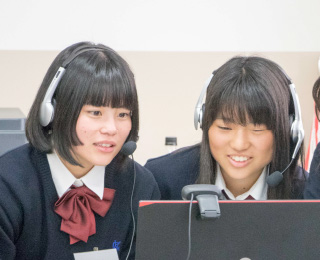
For junior high and high school students who attend school on weekdays, it would be very convenient if they could study abroad within the school. International exchange programs that connect students from overseas online as part of school classes or extracurricular activities provide students with the opportunity to absorb real-life English conversation by learning ``in English'' rather than learning English. . Class content varies. A variety of programs are planned to suit your needs, such as research on SDGs issues and cross-cultural exchange where you can introduce each other's culture.
As an example, please refer to the sister city international exchange program planned and operated by our company, With The World, in collaboration with the Sennan City Board of Education, Osaka Prefecture ↓
https://withtheworld.co/sennan_davao_event/
As Sennan City has concluded a sister city agreement with Davao City in the Philippines, exchange classes between elementary and junior high school students from Sennan City and students from Davao City have been realized. During the class, the students gave presentations in English introducing each other's hometowns and cultures, deepening their understanding of sister cities and interacting with the Davao City students.
Study abroad in Japan recommended for university students
1, English training camp
It may be a good idea for university students, who are able to expand their range of activities and secure more time than junior high and high school students, to participate in a domestic English training camp. There are places in Japan where many people from other countries stay. The appeal of English training camps is that by putting yourself in that environment, you can make foreign friends, practice the language together, and have cross-cultural exchanges. Many agents stay at famous tourist destinations, so you can enjoy learning English while sightseeing.
2, International volunteers and interns
For university students who are about to start job hunting, it would be even better if language learning itself would add even a small amount to their resume. There are ways to improve your English skills while working, such as teaching Japanese to students from other countries, volunteering to provide study support, and providing guidance to foreign tourists. The appeal of volunteering and interning is that you can choose activities that suit your interests, and you can enjoy the sense of accomplishment of helping others.
Our company, With The World, is also looking for interns to work as learning assistants (commonly known as LAs) who will act as facilitators in international exchange classes at junior high and high schools! Would you like to work using your English skills? If you are interested, please check this application page ↓
https://activo.jp/users/109148/volunteer
Finally
In this article, we introduced domestic study abroad, which is in increasing demand. Domestic study abroad allows us to learn languages and experience different cultures while staying in Japan, and is a great way to develop global human resources with both local and international characteristics in each region without having to travel overseas. I think it will be a step.
For those of you who are thinking about studying abroad in Japan, it might be a good idea to think about whether studying abroad matches the goals you want to achieve and which method is best for you!
Our company, With The World, plans and operates domestic study abroad programs (online international exchange classes) at each school in order to develop global human resources who have both language skills and an international mindset in each region.
Please also refer to the following articles as examples of domestic study abroad programs planned by our company.
With The World “India Online Study Tour has been held! ”
https://withtheworld.co/india-online-study-tour-report/